Welcome...

...to cinematic opinions of Jack Kirby. Expect wit, wisdom and irregular updates.

Search This Blog

Sunday, 17 June 2012

Casa de mi Padre Review


This latest offering from the perennially amusing Will Ferrell stars the talented comic as Armando Alvarez, the second son of a ranch owner in Mexico. Armando’s life is turned upside down by the return of his beloved but drug-dealing brother Raul (Diego Luna), who brings with him not only his mysterious new fiancé Sonia (Genesis Rodriguez), but the wrath of rival drug lord The Onza (Gael Garcia Bernal). Thus the stage is set for a grand tale of love, rivalry, violence and redemption. Saturday Night Live alumni Matt Piedmont makes his feature film debut as director.
Did I mention it’s all in the Spanish language? Beyond the initial novelty of watching the talented Ferrell speak flawless Spanish, Casa de Mi Padre is a very funny, enjoyably silly spoof of Mexican Westerns and melodramatic telenovelas and mines a similar vein of comedy as Blaxploitation parody Black Dynamite.
Ferrell can be a divisive comedian and some would be largely justified in levelling accusations of self-indulgence at the prospect of a daft tongue in cheek film in another language. As a fan of Ferrell however, I thought the film boasted a lot of the charm of his best work (such as Elf or Megamind) and was more memorable than many of his seemingly endless sports comedies. It doesn’t have the phenomenally high laugh rate of an Anchorman or a Zoolander but it was certainly very entertaining and had the audience of which I was a part of chuckling loudly and frequently. It’s also reassuring to see Adam McKay, frequent Ferrell collaborator credited as a producer.
Those who enjoyed Y tu mamá también or Rudo y Cursi will be as delighted as I was to see Mexican acting duo Bernal and Luna reunite for a third time. They don’t share a great deal of screen time but the obvious enjoyment they are having on set is evident on screen. The inclusion of Genesis Rodriguez is another treat. The charismatic actress was more or less the best thing in the otherwise turgid non-thriller Man on a Ledge so it’s excellent to see her in an actually decent film. I predict she’s going to go on to bigger and brighter things very soon.
Other things to look out for in the film include some several rousingly entertaining musical numbers (Ferrell gives his not at all unimpressive vocal cords a mariachi work out in the film’s songs), some deliberate production goofs and low-tech special effects and the best ever fight scene involving a lion puppet (nod nod, wink wink).
Whilst perhaps not for everyone – it’s doubtful a mainstream audience will take it into their hearts, the genre of film being parodied being perhaps a little obscure on this side of the pond – Casa de Mi Padre will provide some big laughs and high entertainment for those who will take the trouble to seek it out. In short, la película es buena.

The Divide Review


I have an interest in nuclear war. Well, I have an interest in stories about nuclear war, to be more precise. I’m a big fan of films such as When the Wind Blows and television such asThreads. One of the books I’m currently reading is a biography of Robert Oppenheimer. So when I read the synopsis of The Divide, I was immediately interested. In the film, nuclear warheads are dropped on New York City and a handful of people manage to take shelter in the basement of a tower block, a sanctuary that becomes a prison and then a madhouse, as Very Bad Things unfold.
The nuclear war aspect is really just a hook on which to hang the real focus of interest of the film: the effects of enforced proximity and the destruction of social norms on a group of strangers, with a particular focus on gender roles. Does that sound a little dry? Fret not; it’s also a deeply disturbing psychological horror, with some genuinely strange and visually arresting moments as the film goes on. The initial nuclearly-bombed setup is quickly and cheekily relegated to MacGuffin status (the identity of the perpetrators of the nuclear strike is left deliberately ambiguous; the Arabs? The North Koreans? The Americans?) until the end of the film, which leaves the viewer with some genuinely haunting images.
The main crux of the film is the degeneration of the characters without society or an authority to keep them in check and looks specifically at how (some of) the male characters begin to treat the women (in short, abominably). We view the film through the eyes of Eva (Lauren German), who quickly comes to realise that her partner Sam (Iván González) is not going to be a top dog of a Lord of the Flies. The main power struggle is between misanthropic, weirdo building superintendent Mickey (Michael Biehn, who is excellent) and Josh, a genuinely terrifying Milo Ventimiglia (Heroes).
Some may find the film overly bleak and even mean-spirited. Personally, I would say ‘uncompromising’ and ‘challenging’ are more suitable adjectives with which to describe The Divide. In any case, a film that begins with the total destruction of one of the biggest cities on earth is unlikely to have a happy-clappy payoff. I enjoyed that it wasn’t afraid to be complex with its ideas and its characters. Director Xavier Gens, best known for the less than well-remembered Hitman adaptation, has artfully constructed The Divide. It is likely to satisfy horror fans (though its stock in trade is less soundtrack-punctuated scares, more the gradual realisation that somewhere along the line, something has gone deeply, irrecoverably and hideously wrong), sci-fi fans and any errant sociologists that care to view the film. A pessimistic view of humanity? Yes (personally I’d like to believe that the basic humanity of people would remain in situations such as this). One of the more interesting and engaging horror films of recent years? Most definitely.

Snowtown Live - Q&A


On Thursday night, Revolver Entertainment marked the release of Snowtown with a screening of the film, a live Tweet-along and a Q&A with its director Justin Kurzel. Snowtown is a depiction of the real life murders that happened in the nineties in the town close to Adelaide. The film is told from the point of view of Jamie (Lucas Pittaway), an abused teen that becomes embroiled into the world of John Bunting (Daniel Henshall), an outwardly personable man who also happens to be a sadistic murderer.
The film is relentlessly tense (aided by Jed Kurzel’s outstanding score) and oppressively bleak. It is at times almost impressionistic and its use of oversaturated imagery adds to the near-dreamlike quality of the film. Whilst much of the violence is left unseen, what we do witness is so gut-wrenchingly inhumane it’s physically difficult to watch. I had to duck out for a quick breather after a particularly nasty bit involving a toenail and some pliers.
The cast of Snowtown are universally excellent and Pittaway and Henshall particularly so. Pittaway doesn’t seem to really domuch, but it’s his character’s curious passivity from which we must decide how culpable he is in the crimes the film depicts. It’s a reasonably complex performance. Henshall is perfect as the monstrous Bunting, a man able to worm his way into the lives of those he abuses and of those he would have join him in abuse with his veneer of charm.
After the screening, we were given a few moments to recover before Justin Kurzel took our questions. You can listen to the recording of the Q&A at this location. Listen out for questions from Midnight Video’s (a podcast you really should be listening to) Phil Walsh and HeyUGuys’ Adam Lowes.
You can read a Storify of my tweets from the event here.

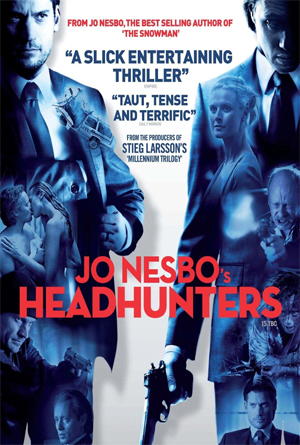
Headhunters Review


My only prior knowledge of Jo Nesbø was that posters for his books seemed to crop up on the underground with alarming rapidity a couple of years ago when The Girl with the Dragon Tattoo series’ popularity peaked. Clearly, I thought with cynicism, some wily publisher is cashing in on the current interest in Scandinavian literature. Of course, that meant it was only a matter of time before Nesbø’s work started appearing on screen too. I hadn’t learnt any more about Nesbø between noticing those posters and prior to the screening ofHeadhunters (until writing this review, I had assumed Nesbø was a woman), other than that there is, apparently Nesbø-themed pornography urbanely entitled ‘Jo Lesbo’.
So I had little to no expectations going into Headhunters. The story follows an executive recruiter (or ‘headhunter’), the decidedly un-Norwegian sounding Roger Brown, a man with a Napoleon complex  who has blagged his way into a comfortable life, a big house and the arms of a woman he considers out of his league, his wife Diana (Lund). Unfortunately, in order to make ends meet, Brown has found it necessary to earn additional income through less than legal means and, along with his somewhat inane partner in crime Ove (Sander), has become an art thief. When he discovers that his latest mark, the impressive Clas Greve (Coster-Waldau), is apparently sleeping with Diana, Brown sabotages Greve’s chances of landing a top position at a GPS company. However, Greve is a former soldier and begins seeking revenge on Brown, starting a deadly game of cat and mouse. The Gordian plot only gets knottier from hereon in.
Headhunters was an absolute treat. Its black as night humour, clever plotting, strong characterisation and bouts of extreme violence were straight up my street. Headhunters is essentially a Scandinavian Coen Brothers film (think FargoBlood Simpleand Burn After Reading), which is, of course, a very good thing. Whilst the casual violence and sense of meaninglessness of the Coens are present in Headhunters, there’s also a level of sincerity and pathos underneath the ridiculousness of the events film.
Much of the film’s success is due to Aksel Hennie’s outstanding central performance as Brown. Hennie’s character has a bizarre mixture of resourcefulness and stupidity about him and scuttles about the film, looking like the strange lovechild of Steve Buscemi and Alan B’stard. The role requires an awful lot of him (not least a fantastic Trainspotting/Slumdog Millionaire WC moment) and Hennie does more than justice to it. Brown is something of a creep and frequently unpleasant; it’s indicative of Hennie’s quality that we root for his character nonetheless.
Arguably, the intricacies of the plot do not quite hang together – it may require multiple viewings to make sure, but other than that, Headhunters is an exceptionally good film. Cast any lingering associations with The Girl with the Dragon Tattoo straight out of your mind, if indeed you had any. This is a completely different kettle of fish. Surprising, exciting and frequently hilarious, Headhunters is riotously entertaining and definitely worth seeking out. It also contains the best dog death in any film this year so far.

The Pirates! in an Adventure with Scientists Review


There are a few things in cinema that can be described as a safe bet. One is a Chris Nolan film is probably going to be pretty good. Another is Jeff Bridges being extremely watchable in anything he’s in. You can also add an Aardman production almost always being a good thing to that list.
The folks who brought you Wallace and Gromit and Chicken Run have opened their plasticine kit once more to bring us a nautical but nice pirate adventure, with added scientists. Hugh Grant voices the logically named Pirate Captain, whose sole ambition is to at last win the coveted Pirate of the Year Award. After a chance encounter with Charles Darwin, he realises his best chance of plundering enough booty to impress the judges is to use his trusty pet dodo Polly to win the Royal Society’s similar Scientist of the Year prize money, whilst avoiding the infamously pirate-averse Queen Victoria.
Like Arthur Christmas before it, Aardman have assembled an excellent cast to voice their clay models. The on-form Grant heads up the talent, flanked by David Tennant, Imelda Staunton and Ashley Jensen, to name but four. There’s also Salma Hayek, Jeremy Piven, Martin Freeman, Lenny Henry, Brendan Gleeson and Brian Blessed to name six more.
Similarly to the recent Muppets reboot (we’re being rather spoilt for decent family-fare at the moment it seems), the strengths of The Pirates! are in its audience-spanning appeal and its frighteningly consistent laugh rate. Gideon Defoe’s script, an adaptation of his own tongue-in-cheek novel, is responsible for a great deal of humour, but as we’ve come to expect from Aardman, there are also hundreds of sight gags littered throughout the film, meaning you’re never waiting more than several seconds between giggles. The humour is pitched perfectly to please both sprogs and grown-ups. Defoe’s series of Pirates!books are primarily aimed at adults in the first place and their deep sense of irony and wry humour has not been lost in transition to the screen. Thankfully though, kids are highly unlikely to be alienated or left out by the jokes and the film is without the air of smugness that pervades such ‘a bit of blue for the dads’ films like the Shrek franchise.
Credit has to be given to Aardman for how visually stunning the film is. The level detail in the models is astounding and watching the whole thing in motion is a feast for the eyes. I’m not normally one for re-watching films, but I’d make an exception for Pirates! firstly to try and catch the jokes I missed the first time around and secondly simply to marvel at the incredible attention to detail the film boasts.
This is the part of the review where I’d normally mention a few detracting aspects of the film, but for the first time in ages, I don’t think I can name a single thing I didn’t like about the film. Given the choice, I’d see it in 2D, but that’s just a personal preference. The Pirates! is a wonderful achievement that deserves every success. You timbers will be well and truly shivered.

Machine Gun Preacher Review


As you are probably and unfortunately aware, Machine Gun Preacher is not the tale of a man of god that takes to the mean streets of LA armed to the teeth to deliver some righteous justice and stick it to the man. Along with Hobo with a Shotgun, it’s one of the best exploitation titles you could hope for. In real life, however, Machine Gun Preacher is the true story of Sam Childers, former hell-raising bad-boy, who, after the kind of epiphany only brought on by stabbing a homeless person half to death, turns to Jesus. After seeing the light, Sam begins working in Sudan, caring for the orphans of the war zone.
The DVD release of Machine Gun Preacher is timely, given the recent internet outcry over Kony 2012. The backlash against that video (and to some extent the ‘panning’ Machine Gun Preacher received on its release) is somewhat aggravating; is it important how and why people are made aware of real world issues as long as they are made aware in the first place? The humanitarian disaster happening in Sudan right now is appalling and Machine Gun Preacher should at least be applauded for its largely unflinching and mature portrayal of the crisis.
It isn’t the point of a review to judge how worthy a film’s subject matter is though, and the narrative itself can be somewhat plodding. It also takes director Marc Forster over two hours to tell a story that is in real life on-going, meaning that it’s both overlong and inconclusive. And while Gerard Butler gives a generally rather mature and focused performance, his wild man act at the beginning of the film feels somewhat more like a caricature than a portrayal. Towards the end of the film however, things do get interesting as Sam begins to undertake his mission more aggressively, to the detriment of both his family and his new-found faith.
There’s also able support in the form of Michael Shannon and Michelle Monaghan and Madeline Carroll (whom sharp-eyed readers will recognise as creepy Ben’s childhood sweetheart Annie from Lost) is also rather good as Sam’s daughter.
Machine Gun Preacher is a much more challenging and occasionally more interesting film than perhaps its title and the presence of Butler would suggest. It’s no must-see, but as a competent and sober depiction of a continuing travesty, it more than does its job.

Touching Home Review


Touching Home is a true story written and directed by Logan and Noah Miller about their relationship with their late father. With no previous experience of working in film and a budget of $2million (small beer in movieland), they have created an interesting and sensitive, if workmanlike film. Touching Home sees the twin brothers striving to break into professional baseball whilst dealing with their homeless and alcoholic father Charlie, played by an excellent Ed Harris.
Whilst the film is an impressive achievement in and of itself, though it pains me to say it, Touching Home is simply a little dull. It tends to meander and dwell too much where succinctness and implication would serve the film better and feels rather baggy around the edges. There’s a very televisual feel to proceedings, which marred my enjoyment somewhat.
That said, the cast are excellent. Alongside Harris, Robert Forster (probably best known for his brilliant performance in Quentin Tarantino’s Jackie Brown and currently appearing inAlcatraz) does himself proud as the town’s fatherly cop and the boy’s former coach. Credit is also due to Brad Dourif, who gives a sensitive performance as Clyde, Charlie’s brother with learning difficulties. Logan and Noah Miller, who play fictionalised versions of themselves, are also good.
Baseball is seemingly the medium required to tell the stories of American sons struggling to come to terms with the lives of their fathers. See also Field of Dreams and The Open Road. I’m not really a fan of the former (sacrilege to many, apparently) and I doubt the latter will have set many people’s world alight. Perhaps being British and only really caring about one sport that isn’t baseball makes it difficult for me to engage properly with these films. Touching Home may not reverse the trend I’ve just strung together of slightly ropey father-son baseball dramas, but heck, it’s at least as good as those other two and is much more authentic in its affectionate, yet honest portrayal of a deeply flawed individual.